
Get amazing free resources.
Grab your 59+ Growth Ideas + 10-Hour Time-Creation Guide FREE. Join our inner circle for exclusive tips and early access offers.
.avif)

Grab your 59+ Growth Ideas + 10-Hour Time-Creation Guide FREE. Join our inner circle for exclusive tips and early access offers.
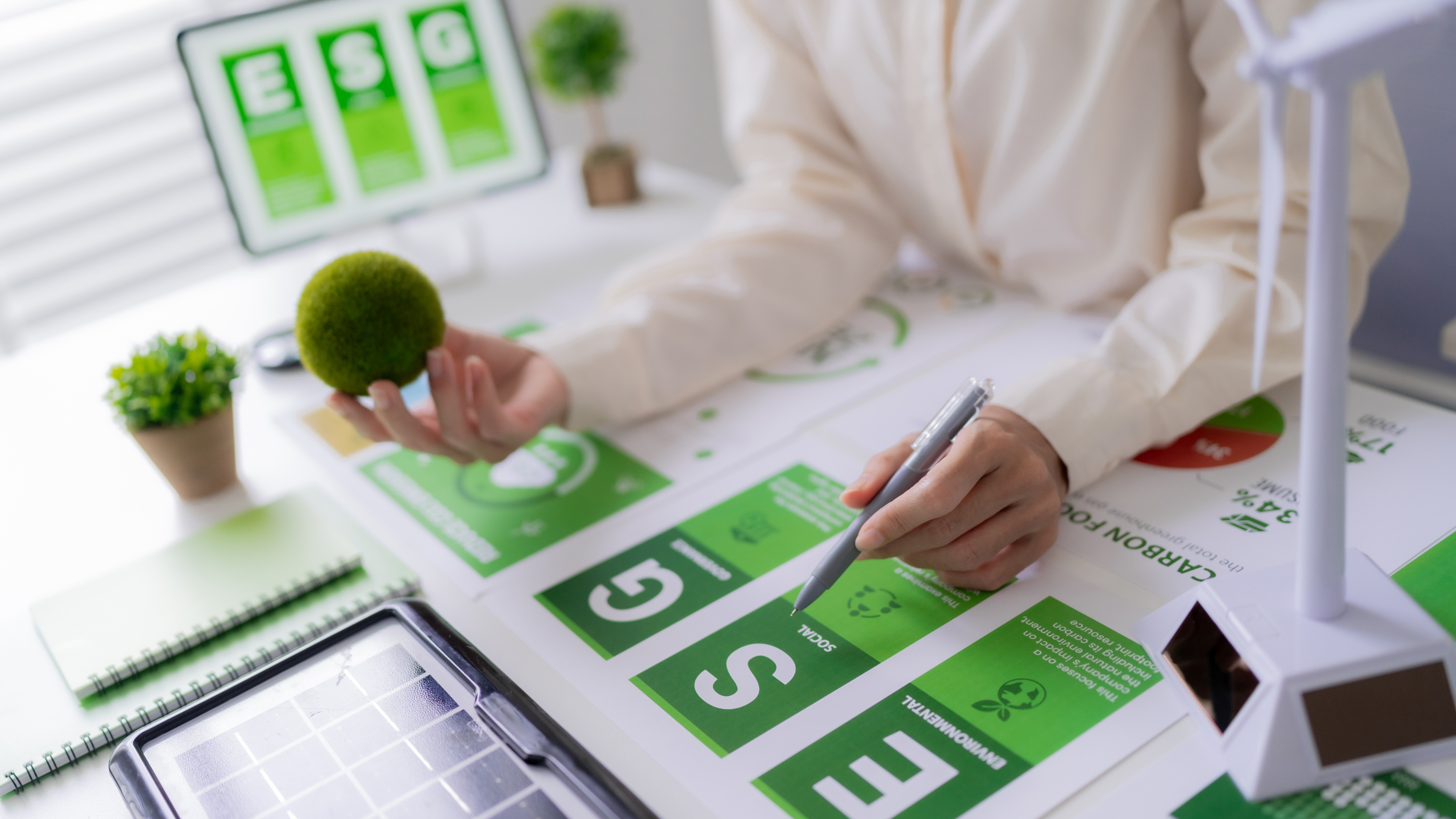
Outcome: Entrepreneurs will leave with a practical roadmap for turning sustainability from a good intention into a viable business model, operating plan, and credible marketing strategy.
For entrepreneurs, building a green business means designing environmental responsibility into how the company creates, sells, and delivers value—not simply adding an eco-friendly message after launch. The strongest sustainable businesses connect a real customer need with practical choices around materials, energy, suppliers, packaging, transportation, waste, and long-term costs.
A sustainable startup does not have to solve every environmental problem. It needs to identify the impacts it can realistically influence and build measurable improvements into its operating model.
In brief: Start with a genuine customer problem → identify your environmental footprint → set specific goals → design operations around those goals → measure results → communicate only what you can support with evidence.
This approach turns “green” from a slogan into a business discipline.
Sustainable businesses may require different investments than conventional alternatives. Some increase upfront costs but can reduce waste or operating expenses over time.
Several cost categories deserve early attention. Materials and suppliers call for weighing recycled, renewable, reusable, lower-impact, local, or responsibly sourced options. Energy and water costs come down to choices like efficient equipment, renewable-energy options, and ongoing conservation and monitoring. Packaging decisions hinge on material volume, recycled content, reusability, and realistic end-of-life options. Operations costs cover waste handling, storage, production efficiency, and transportation. Measurement relies on energy bills, water use, waste volumes, sourcing records, or emissions data. And verification requires testing, documentation, or credible certification to support any claims you make.
Your Start-to-Launch Checklist
A green marketing plan should translate measurable practices into specific customer benefits. Explain what changed, how much changed when that can be substantiated, and what the claim actually applies to. Avoid making sweeping statements simply calling an entire company or product “green” or “eco-friendly.” The Federal Trade Commission advises marketers against broad, unqualified environmental-benefit claims and says environmental claims should be supported by appropriate evidence.
Strong visuals can make those specific stories easier to understand. Entrepreneurs can use image tools to refine sustainable branding, product photography and campaign graphics while reusing existing creative assets when appropriate. The Adobe Firefly AI image upscaler improves image resolution, clarity and sharpness, allowing photos to be enlarged while preserving visual detail and quality—useful when an existing product image, logo or campaign asset needs a cleaner presentation rather than an entirely new shoot.
Green businesses can encounter higher initial costs, limited supplier choices, operational complexity or environmental targets that prove harder to achieve than expected. Poorly documented marketing claims can also damage customer trust and create regulatory risk. Build contingency room into budgets and promises; sustainability works better as measurable progress than as a claim of perfection.
Entrepreneurs who want a structured reference can explore the EPA’s Waste Reduction Model resources for small businesses. The resources help organizations establish material baselines and compare waste-reduction options, with additional pathways covering water efficiency, electronics, food waste and sustainable materials management.
Does a sustainable business have to be completely carbon-neutral?
No. A credible starting point is identifying material impacts, reducing what the business can control and documenting progress rather than making unsupported absolute claims.
Can sustainability actually reduce business costs?
It can. Waste prevention and improvements in material, water and energy efficiency can lower certain operating expenses, although investments and payback periods vary by business.
What should an entrepreneur measure first?
Start with the factors most relevant to the business model: materials, waste, energy, water, packaging and transportation are common candidates.
A green business becomes compelling when sustainability improves the way the company operates, not merely the way it describes itself. The goal is not instant perfection; it is a business capable of creating customer value while continually reducing unnecessary environmental impact.

This scenario involves a potential client who has shown interest in your services. Perhaps you’ve had a sales call, an initial consultation, or exchanged messages. The client expresses a need to think it over or promises to get back to you. This follow-up type is critical as it often leads to a final decision.
Key Strategy:
2. Cold Prospecting Follow-Up
Cold prospecting involves reaching out to potential clients who have not initiated contact. While the conversion rates are typically lower compared to warm leads, this approach can still be valuable in certain industries. The key here is persistence and a well-structured follow-up process.
Key Strategy:
3. Post-Purchase Follow-Up
Once a client has purchased your service, especially if it’s a service they might need repeatedly, follow-up is essential. This shows you care about their ongoing satisfaction and helps build a long-term relationship, fostering loyalty and repeat business.
Key Strategy:
The Importance of Follow-Up: Insights and Statistics
Statistics underline the significance of follow-up in sales:
Understanding these numbers highlights the missed opportunities if follow-up is neglected. A structured follow-up process ensures you're not leaving potential sales on the table and helps in building a solid client base.
Building an Effective Follow-Up Process
Conclusion
Effective follow-up is not just about closing a sale; it's about building relationships and showing your clients that you care about their needs. By implementing a structured follow-up process, you can significantly enhance your sales and foster long-term client loyalty.
Ready to double your business without adding more time? Book a sales call with me HERE and let's talk about how it would look like for you.


When you run a business in an industry with a lot of competition (ex. financial services, health and wellness, or online business support) marketing yourself the same way all your industry peers do makes you blend in the crowd, not stand out from it.
And when you blend in, the only clients you attract are the ones looking for the cheapest service. These clients will switch to another provider as soon as they get a better price.
They will never refer you. Therefore, growing your business is so much harder. Because it forces you to keep finding new people over and over and over again.
That’s why you want to attract the type of client who wants to work with you for you. And you can’t do it without a unique creative marketing strategy that showcases your competitive advantage. That simply and clearly explains why your ideal client should be working only with you.
When you work with me one-on-one, we develop a T.O.P. CEO Winning Strategy with the Owner-First Approach. Part of this process is mapping out your ideal client journey with you to extract everything that’s unique about how you serve them and convert it into marketing and sales materials.
Yes, we do use the best marketing and sales practices but expanded from various industries (not just your own) and we tailor them to your unique value proposition so that you stand out from the crowd, shining bright like a diamond :).
With my support, you start attracting your ideal high-value clients.
The ones that don’t switch providers because they found a $200 discount somewhere else. The ones that value a strong relationship with you. The ones that will rave about you and refer you to their friends and family, and everybody else they talk to.
Growing a business with these clients, it’s so much easier and more fun. You enjoy serving them. And marketing doesn’t feel hard either. Because some of it is done by your clients, not you.
If you want to double your business without adding more work with only your best and ideal clients, we need to talk. Book a sales call with me today here.
With much love & to your success,
Maggie
P.S. All my clients get results.
No matter the industry they come from. If you want to learn from some of them, I invite you to tune in to these Diamond Effect podcast episodes.


