
Get amazing free resources.
Grab your 59+ Growth Ideas + 10-Hour Time-Creation Guide FREE. Join our inner circle for exclusive tips and early access offers.
.avif)

Grab your 59+ Growth Ideas + 10-Hour Time-Creation Guide FREE. Join our inner circle for exclusive tips and early access offers.
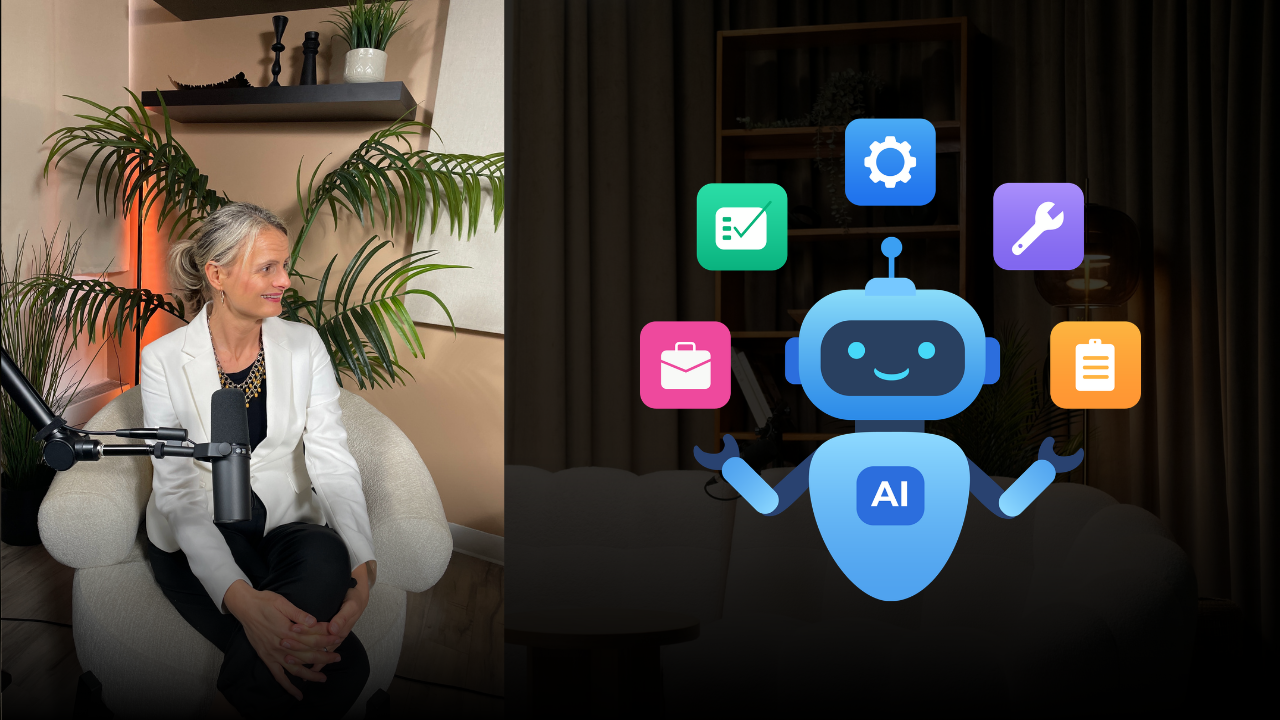
Imagine that tomorrow you could hire five new people for your business.
They don't sleep, they don't take vacations, they can research, write, analyze, respond to customers, create reports, follow up with leads, document processes, and help automate repetitive work and they cost a fraction of what a full-time employee would.
Sounds like a dream, right? That's essentially the promise of AI, and I do believe it's going to transform how small businesses operate.
I use it in my own business, I've been using it for a couple of years now, and I teach my clients how to use it well.
But here's the part I don't think we're talking about enough: AI will not save your business.
In fact, I think AI is going to expose what's broken about your business faster than anything we've seen before and if you don't fix what it exposes before you apply it, it can make those problems worse.
It can make a good process faster, but it can also make a bad process faster.
It can help a well-run team accomplish more or create more activity inside a confused, low-performing one. It can analyze your data, but it can't magically make bad data good.
It can automate a customer journey, but it can't turn a fundamentally broken customer experience into a great one without you fixing it first.
And it certainly can't replace the strategic thinking and decisions only you, the business owner, can make.
So below I will walk through five things AI is going to expose in your business, and what you should fix before you automate anything.
When business owners hear about AI, the natural question is: what can AI do for me? What can I automate? What can I replace?
I think there's a better first question: what should actually be happening in my business?
What's the ideal state of my customer journey or my processes before I even think about automating them?
You need to have the process, know that it works, know it's optimized and then think about automating it.
For years, inefficiency in businesses has hidden in plain sight, simply because humans were doing the work manually.
Maybe creating a report takes three hours. Maybe onboarding a client takes two days. Maybe following up with leads takes 30 minutes or never happens at all, because the owner is overwhelmed and keeps telling themselves there's no time.
AI comes along and says "I can do that in five minutes," which is great but it also forces a much more important question: should we even be doing this the way we're doing it?
That's where AI becomes genuinely valuable not just as a productivity tool, but as a business diagnostic. It forces you to look underneath the hood.
You can't automate something that doesn't exist.
An owner says, "I want to automate client onboarding" which is great.
So I ask: "What actually happens when a new client signs?" And often, there isn't really a process. John sends an email, Sarah creates a folder, the owner remembers to send a contract (there are three different versions floating around on different computers), someone else texts the client, the welcome package goes out whenever someone remembers or doesn't.
If that's your process and you try to automate it, you're not automating a system.
You're automating chaos, and chaos moves faster is still chaos.
You have to understand the process first, simplify it, document it, decide who owns it and then automate the parts that don't require critical thinking or judgment calls.
The future of successful small businesses isn't about who has the flashiest AI tools. It's about who has the stronger business architecture underneath those tools.
Your business shouldn't be a collection of disconnected activities like marketing here, sales there, service delivery somewhere else, disconnected from follow-up and invoicing.
Say you use AI to respond to website inquiries in 30 seconds instead of 48 hours. Fantastic.
But if your proposal still takes five days to arrive, your sales process is confusing, your onboarding is clunky, the client has to repeat the same information three times, and your delivery doesn't match what you promised you haven't fixed the customer journey.
You've just made one small part of it faster.
Don't just ask, "how do I improve this one touchpoint?"
Instead ask: "what is the entire experience my customer has with my business?"
Then look for the gaps, the leaks, the roadblocks and fix those before you automate.
Your customer doesn't experience your business in departments.
They experience one brand.
And without you designing that experience intentionally, AI will make the gaps between your functions more obvious to the customer and not in your favor.
This becomes critical as your business grows.
Say your AI system analyzes your customer data and identifies that one category of client is far less profitable than another.
Great, now what? Who decides what to do about it? You? Sales? Operations? Finance?
Often what you discover has nothing to do with the technology and it's that the business never defined decision ownership in the first place.
This tends to happen when technology gets implemented in a rush, to solve one urgent problem, without thinking through how it will ripple through the rest of the business.
I always come back to something one of my old bosses taught me:
Change one, and the other two get affected.
Technology tends to be the most disruptive of the three, and without proper preparation, implementing it creates more chaos than it solves especially in small businesses that hire ad hoc, in a rush, because current staff is overwhelmed.
People end up confused about what they're actually responsible for, what they can decide on their own, and what needs to be escalated. And when that's unclear, everything eventually lands back on the owner's desk.
You know the business where the answer to everything is "just ask the owner."
Special request? Ask the owner. Something goes wrong? Ask the owner. Price needs changing? Ask the owner.
Often, owners don't fully realize how much of the business lives inside their own head which customers get exceptions, how to handle every issue that lands in whatever inbox happens to catch it, what "good" looks like, all the little rules nobody else knows.
If you want AI to help you scale, this is the wall you'll hit first, because AI can't scale a business that only exists in your brain. It can't take your judgment and multiply it.
You have to get that knowledge out of your head into processes, policies, decision rules, documentation, training.
"If this happens, do this." Only once those exist can AI actually help speed things up and turning a two-day quoting process into two hours, for example.
And the goal isn't to eliminate the owner.
It's to move the owner out of being the bottleneck.
You didn't build this business to be its prisoner.
You built it to have freedom and an asset you actually own.
You should be leading the business, not being the business.
This is true of any new technology, and I learned it back in my corporate days: garbage in, garbage out.
If your team is calling the wrong people or bothering someone in the middle of the night because bad data was entered somewhere upstream, that's not a technology problem rather it's a data problem, and AI won't fix it.
It just processes bad information much faster than a human could, which doesn't make it good but it just makes the bad decisions arrive with a very convincing explanation attached.
Think about the simple example of trying to identify your VIP customers and their buying patterns using AI.
Except some of that information lives in your CRM, some in spreadsheets, some nowhere at all, some customers are duplicated three times because roles changed instead of profiles updating, and different people use different definitions for the same term.
Feed that into AI and you'll get a beautiful, convincing, wrong answer which one that can genuinely send you in the wrong direction.
The businesses that get the most value from AI won't be the ones with the most sophisticated tools.
They'll be the ones with clean data, clear processes, consistent definitions, and disciplined operations underneath. That's the foundation that makes AI actually powerful.
And one more worth asking: can you actually measure whether it's working? Otherwise you're just automating activity, not improving the business.
There are two ways to think about AI. As an accelerator, it makes something happen faster. As a multiplier, it amplifies whatever is already there.
A great process plus AI is a great process, faster. A bad process plus AI is a bad process, happening faster.
A great customer experience plus AI gets even better. A broken customer journey plus AI is confusion at scale.
Good data plus AI means better insights and better decisions. Bad data plus AI means bad decisions usually at scale.
A well-led team plus AI has more capacity to go further. A team with unclear responsibilities and chaos plus AI just means more activity and more chaos usually landing back on you.
I genuinely believe AI is giving small business owners a reason to look at their businesses differently.
To ask what we're doing, why we're doing it, who owns it, how we can simplify it, whether it creates real value for the customer, and whether someone other than us could be doing it.
Those are business-building questions, not just AI questions.
A business worth owning isn't simply one that makes money.
Growth shouldn't automatically mean more chaos and more work for you.
So before you go looking for your next AI tool, look underneath the hood of your business instead.
Find what's messy, unclear, and repetitive. Find what nobody owns. Find what only exists in your head even though someone else could do it just as well, or better.
Those are the things AI is going to expose, and make worse, if you don't fix them first.
Your goal isn't to build an AI-powered business.
In today's world, it feels like everyone's chasing that and losing sight of the real goal which is to build a great business that serves your customer at the highest level, that people recognize and love, where you're the best in your industry for the people you serve.
Then you use AI to make that business even better.
That's a business worth owning.
If this raised questions about where the real gaps are in your own business like process, customer journey, decision ownership, or the data underneath it all — book a complimentary consultation and let's take a look under the hood together.

Outcome: Entrepreneurs will leave with a practical roadmap for turning sustainability from a good intention into a viable business model, operating plan, and credible marketing strategy.
For entrepreneurs, building a green business means designing environmental responsibility into how the company creates, sells, and delivers value—not simply adding an eco-friendly message after launch. The strongest sustainable businesses connect a real customer need with practical choices around materials, energy, suppliers, packaging, transportation, waste, and long-term costs.
A sustainable startup does not have to solve every environmental problem. It needs to identify the impacts it can realistically influence and build measurable improvements into its operating model.
In brief: Start with a genuine customer problem → identify your environmental footprint → set specific goals → design operations around those goals → measure results → communicate only what you can support with evidence.
This approach turns “green” from a slogan into a business discipline.
Sustainable businesses may require different investments than conventional alternatives. Some increase upfront costs but can reduce waste or operating expenses over time.
Several cost categories deserve early attention. Materials and suppliers call for weighing recycled, renewable, reusable, lower-impact, local, or responsibly sourced options. Energy and water costs come down to choices like efficient equipment, renewable-energy options, and ongoing conservation and monitoring. Packaging decisions hinge on material volume, recycled content, reusability, and realistic end-of-life options. Operations costs cover waste handling, storage, production efficiency, and transportation. Measurement relies on energy bills, water use, waste volumes, sourcing records, or emissions data. And verification requires testing, documentation, or credible certification to support any claims you make.
Your Start-to-Launch Checklist
A green marketing plan should translate measurable practices into specific customer benefits. Explain what changed, how much changed when that can be substantiated, and what the claim actually applies to. Avoid making sweeping statements simply calling an entire company or product “green” or “eco-friendly.” The Federal Trade Commission advises marketers against broad, unqualified environmental-benefit claims and says environmental claims should be supported by appropriate evidence.
Strong visuals can make those specific stories easier to understand. Entrepreneurs can use image tools to refine sustainable branding, product photography and campaign graphics while reusing existing creative assets when appropriate. The Adobe Firefly AI image upscaler improves image resolution, clarity and sharpness, allowing photos to be enlarged while preserving visual detail and quality—useful when an existing product image, logo or campaign asset needs a cleaner presentation rather than an entirely new shoot.
Green businesses can encounter higher initial costs, limited supplier choices, operational complexity or environmental targets that prove harder to achieve than expected. Poorly documented marketing claims can also damage customer trust and create regulatory risk. Build contingency room into budgets and promises; sustainability works better as measurable progress than as a claim of perfection.
Entrepreneurs who want a structured reference can explore the EPA’s Waste Reduction Model resources for small businesses. The resources help organizations establish material baselines and compare waste-reduction options, with additional pathways covering water efficiency, electronics, food waste and sustainable materials management.
Does a sustainable business have to be completely carbon-neutral?
No. A credible starting point is identifying material impacts, reducing what the business can control and documenting progress rather than making unsupported absolute claims.
Can sustainability actually reduce business costs?
It can. Waste prevention and improvements in material, water and energy efficiency can lower certain operating expenses, although investments and payback periods vary by business.
What should an entrepreneur measure first?
Start with the factors most relevant to the business model: materials, waste, energy, water, packaging and transportation are common candidates.
A green business becomes compelling when sustainability improves the way the company operates, not merely the way it describes itself. The goal is not instant perfection; it is a business capable of creating customer value while continually reducing unnecessary environmental impact.
.png)
One of the things I push back on in the coaching industry is the idea of a single rigid formula that is a "this is the way, follow these exact steps in this exact order" approach. For some clients, in some situations, that works. I won't pretend it never does. But after years of coaching hundreds of business owners across different industries, stages, and personalities, I've learned that an overly prescriptive formula doesn't account for the real, messy variety of circumstances business owners are actually in.
It doesn't account for the fact that one owner is drowning in overwhelm and can't think straight, while another has plenty of clarity but no systems to deliver. It doesn't account for the owner who needs to fix their foundation before they can grow, versus the one with a rock-solid foundation and a broken sales process. Different industries, different seasons of life, different risk tolerances, different definitions of success.
When you take a too-prescriptive approach, you're handing every client the same box and telling them to fit inside it whether they fit or not. I compare it to Cinderella's shoe: you're forcing a client into something too big or too small for them. And when it doesn't fit, the client often ends up feeling like something is wrong with them, when really, the formula just never fit the person.
This is where my Sustainable Scale System is different. It's built more like a set of architectural principles than a rigid step-by-step process. Every client eventually moves through the same three pillars but which pillar we tackle first, how quickly we move, and how we apply it, is always tailored to the person in front of me, their specific situation, and whatever is creating the biggest bottleneck in their business right now.
I don't hand my clients a box and tell them to fit inside it. I hand them a blueprint, and then we build what fits the foundation they've already laid.
Here's what that looks like in practice, through three real client stories.
My first example is a car repair shop owner. When he came to me, his basic processes were established and business was coming in but he was completely overwhelmed, stressed to the point it was affecting his health and his ability to think about anything beyond the day-to-day crisis in front of him. He had bigger goals like building a whole group of car-related businesses but he couldn't even hold those goals in his mind, let alone act on them.
So we didn't start with marketing or brand strategy. We started with him such as his stress, his overwhelm, creating space in his mind and his calendar so he could function at a higher level. We implemented time management and prioritization habits, and once there was structure in his week, we could think strategically about growth starting with hiring additional mechanics so he could step off the tools and start operating like a CEO instead of working like an individual mechanic.
Around the same time, I worked with a professional organizer who had grown her business to a great point and then hit a ceiling. Her issue wasn't overwhelm, and it wasn't a lack of clients but it was that adding more clients would have broken her business and compromised the quality her reputation was built on.
So we started somewhere completely different: her brand foundation, her service delivery processes, and documenting her client experience so she could then hire and train people, build delivery capacity, and grow without sacrificing what made her business great in the first place.
Then there's my client Glory, whose story I share often because of how far she's come. She's a speech therapist who came to me in the early stages of scaling her practice. She was overwhelmed and taking on far too many clients herself even though she'd started building a team because she was terrified of growing that team further, despite demand clearly being there.
Her real challenge wasn't operational overwhelm. It was a limiting belief about her own identity she didn't see herself as a people leader. No amount of strategy was going to fix that without a shift in belief first. So we started with leadership development: helping her see that building a team wasn't just a business tactic, but a way to create a legacy aligned with her mission, and a way to help far more families than she ever could alone. From there we worked through her leadership skills, team communication, and built out training systems so her therapists could deliver the same quality of care her clients expected.
The result: Glory grew from 3 therapists to over 23, and from $80,000 in revenue to nearly a million, in three to four years.
Three completely different starting points. Three completely different first conversations. But the same underlying system, and the same three pillars every client eventually moves through:
1. Strategic Foundation — clarity on your brand, positioning, niche, business model, and your identity as a CEO.
2. Client Acquisition & Service Delivery — predictable lead generation, a strong sales process, and a scalable delivery system that protects quality as you grow.
3. Scale Infrastructure — financial systems, operational excellence, team building, and delegation frameworks that let your business run without you being involved in every single decision.
The pillars don't change. What changes is the sequence which pillar comes first for you, based on where you are and what's creating your biggest bottleneck right now. That sequencing, that ability to diagnose exactly what a specific business and a specific person need first, is where the real coaching happens. It's the art inside the science.
Because I look at every client as a whole person not just a set of business metrics, but a human being with their own stress levels, energy, confidence, and relationship with their own life and business. Our businesses are a direct reflection of our thinking, and we can't outgrow our current level of thinking without doing the work to expand it.
If you're wondering which part of this system you actually need right now what's really holding you back that's exactly what a complimentary consultation is for. I'll ask the right questions, look at your business with fresh eyes, and tell you exactly what I see: where the gaps are, what to prioritize, and how I can help. Book your free consultation here
.png)
You probably don't have a goal-setting problem.
You have a goal-achievement problem.
You know how to set goals. You've probably done it many times.
You've written down what you want. Maybe you've even created a vision board, bought a planner, made a detailed to-do list, or promised yourself that this time will be different.
And for a while, it is.
You're motivated. You're excited. You're taking action.
Then life happens.
Your schedule gets busy. Something unexpected comes up. The goal becomes less exciting. You fall behind for a few days. Then a week.
Eventually, the goal quietly moves to the background.
Until you decide that maybe you need to start over.
If this sounds familiar, you're not lacking ambition, discipline, or even motivation.
You may simply be missing a system that helps you consistently turn your goal into action.
Setting a goal is relatively easy.
Achieving one is different.
The difference is what happens between the moment you say:
"This is what I want."
and the moment you can say:
"I did it."
There can be weeks or months of decisions, actions, distractions, setbacks, uncomfortable moments, competing priorities, and unexpected circumstances in between.
And that's where many goal-setting approaches fall short.
They help you define the destination.
But they don't necessarily give you a system for consistently moving toward it.
Because knowing what you want isn't enough.
You need a way to keep doing the things that will get you there.
Think about some of the goals you've set in the past.
Maybe you wanted to:
None of these goals are achieved by writing them down once.
They are achieved through repeated action.
And repeated action requires more than motivation.
It requires clarity about what matters, a plan for when you'll take action, enough flexibility to deal with real life, and a way to regularly check whether what you're doing is actually working.
That's the thinking behind Dream-Plan-Do.
Dream-Plan-Do is a simple philosophy I developed through my own experience and through coaching business owners and leaders.
It starts with the Dream.
You need to know what you're trying to create. What do you actually want to achieve? What does success look like?
But dreaming is only the beginning.
Then comes Plan.
You need to translate that desired outcome into a practical strategy. What needs to happen? What deserves your attention? What actions will actually move you closer to the goal?
And then comes the part that is often overlooked:
Do.
You have to consistently execute the plan.
Not perfectly.
Not without interruptions.
Not by being productive every minute of every day.
But consistently enough that your actions accumulate into results.
And that's why Dream-Plan-Do isn't a one-time process.
You dream, you plan, you do, you learn, you adjust — and you keep going.
One of the biggest shifts I've made in my own life and in my work with clients is moving from simply asking:
"What do I need to do?"
to asking:
"When am I actually going to do it?"
There's a huge difference.
A to-do list can tell you that something is important.
It doesn't tell you when you'll make it happen.
When important actions remain somewhere on a never-ending list, they're competing with everything else that demands your attention.
The urgent wins.
The easy wins.
The things someone else asks you to do win.
And your important goal gets pushed to tomorrow.
Then tomorrow becomes next week.
A system that connects your goals to your actual time and actions changes that.
Instead of relying on your future self to find time, you intentionally create the time.
This is one of the reasons I am such a strong believer in weekly planning.
In my own experience, separating the decision about what I'm going to do from the actual execution makes me significantly more effective.
The weekly planning practice is also designed to reduce the mental load of constantly deciding what to work on next.
There's another reason people abandon their goals:
They think falling off the plan means they've failed. It doesn't.
Your life will change. Things will take longer than expected. Unexpected problems will appear. You'll have days when you don't feel motivated. Sometimes you'll simply make the wrong decision.
The answer isn't to create a perfect plan that can never be disrupted.
The answer is to have a system that helps you notice what happened, adjust, and continue.
That's why reflection is such an important part of goal achievement.
When you regularly look at what's working, what isn't, and what needs to change, you don't have to spend months repeating the same mistake. You can course-correct.
And you can also recognize what's working — something we often forget to do when we're constantly focused on what's still unfinished.
There's another piece that is easy to overlook.
Achieving meaningful goals often requires doing things that aren't comfortable.
You may need to have a difficult conversation. Put yourself out there. Try something you've never done. Keep going before you see results. Say no to something that would distract you. Change a habit. Or simply continue when the initial excitement has disappeared.
That's why I don't believe goal achievement is purely a productivity exercise.
Your mindset matters too.
The Dream-Plan-Do Journal incorporates short daily practices designed to help you intentionally maintain your mindset while you're working toward your goals.
The purpose isn't to pretend every day will be positive or perfect. It's to build practices that help you stay connected to your progress and continue moving forward.
I created the Dream-Plan-Do Journal because I wanted something more useful than another notebook where you write down your goals.
I wanted a practical system that could sit between the goal you want to achieve and the actions you need to take to achieve it.
Something that would help you keep your most important goal visible.
Something that would help you stay focused instead of trying to improve everything at once.
Something that would encourage you to turn intentions into planned actions.
Something that would help you maintain the mindset required to keep going.
And something that would give you a regular opportunity to stop, reflect, learn, and adjust.
In other words:
A system for turning goals into consistent action.
The journal is designed around a three-month cycle, because meaningful progress takes time — but a defined period also creates a sense of focus and urgency.
It brings together the Dream, Plan, and Do philosophy in one physical place so that your goals don't remain ideas in your head or promises you made to yourself at the beginning of the year.
Welcome! I'm genuinely excited that you're here.
The journal comes with a training where I walk you through exactly how to use it and how I use it with my own goals and with my coaching clients.
The video is designed to make sure you get the most out of the journal rather than simply filling in the pages and putting it on a shelf.
Take your time with it. You don't need to wait for January, a new month, or even the beginning of a quarter to start. The journal was intentionally designed so you can begin when you're ready.
Maybe you don't need another journal.
And that's actually the point.
The Dream-Plan-Do Journal isn't designed to be another place where you write down your dreams and then forget about them.
It's designed to help you build the bridge between:
What you want → What you need to do → What you actually do consistently.
Because achieving your goals isn't about becoming a completely different person overnight.
It's about creating a system that makes it easier to consistently take the actions that matter.
One goal.
One plan.
One week.
One day at a time.
Dream. Plan. Do.
Let's create a business and life intentionally that you love. Buy your copy HERE.
.png)
When you have hired a business consultant, chances are he or she must have provided you with a strategy. If you have ever gone through coaching, you must have gotten clarity, confidence, and a new perspective.
But what do you do when you have the best of strategies and yet find it hard to execute them?
What do you do when you have got the best of mindsets but fail to get systems in place for your business to grow?
These questions guided me in building my business, Stairway to Leadership.
Through experience, I came to realize that sustainable growth of any business is not dependent on the strategy nor on mindset. Rather it is dependent on how well these three
elements are combined to create a winning combination of strategy, execution, and leadership.
One of the major lessons that I have learned while working in the corporate world is related to leadership.
In my role as a leader, I have guided and mentored people who had equal levels of education and opportunities and yet had totally contrasting performance records.
The issue here was not that of intelligence or talent.
It was mindset.
Where some people took feedback as an indication that they are being criticized by others; there were others who took it as an opportunity to learn something new. As a result, those who were ready to learn kept on developing themselves.
This lesson tells us that success does not come out of mere information but its practical application.
Consultants are incredibly valuable because they can identify problems, improve systems, and develop strategic solutions.
But strategy without implementation rarely produces lasting change.
I knew I didn't want my role to end after delivering recommendations. My goal has always been to see clients successfully implement what we've created and brainstormed together. That requires more than expertise. It requires coaching.
This is why consultants are priceless – they are able to spot issues, refine the system, and come up with an effective solution.
However, having a strategy that is not implemented does not guarantee changes. This is something I was aware of from the very start, and therefore, I always aimed at making
sure that my advice would be applied to practice by the client. It takes more than a solid understanding to make it happen.
It takes coaching.
Since most entrepreneurs are likely to face fear, doubt, uncertainty, or being overwhelmed, having a good strategy will not get you anywhere. This is how coaching fits into the picture. This is why I combine my business consultancy services with coaching for my clients.
The second critical point in my career came to me through burnout.
As an ambitious person in general, I was convinced that by working harder I would become more effective. I did manage complicated projects, I was a team leader, and I always got things done. From the outside, everything was successful.
But on the inside, I was exhausted.
Burnout made me reconsider not only the way I worked and led but also the way I lived. Burnout also acquainted me with the world of high performance coaching and high-
performance habits. I have learned that being productive is not about doing more.
It's about being more effective.
Since I have adopted high-performance habits, I am getting more done in less time, while feeling healthier, more focused, and more engaged with my family. Rather than responding to all kinds of stresses, I was making clear decisions and leading with purpose.
This experience entirely shaped my coaching approach.
Eventually, every business arrives at a place where its continued growth is dependent upon the leader running it.
A better plan helps.
Better processes help.
Better marketing helps.
But the business will not be able to grow any further than its leader can lead it.
That is precisely why my coaching work addresses both business growth and leadership effectiveness.
Once an entrepreneur understands how to manage their energy and make decisions with clarity rather than survival, all the rest falls into place.
It gets implemented quicker.
It leads teams better.
It serves clients better.
And it enjoys the fruits of all the effort put in to create it.
All of my work with clients involves three key components.
Every successful business requires a proper roadmap.
In this case, we explore opportunities for growth, optimize operations, develop processes, fine-tune offers, and formulate solid strategies for achieving future success.
Any strategy has value only when implemented properly.
Instead of making suggestions and leaving them behind, I help my clients overcome the difficulties associated with the implementation process and find solutions to any issues.
Business development starts from individual development.
I assist entrepreneurs in becoming better leaders through optimizing their behaviors, attitudes, decisions, and performance levels. When a leader grows, so does the business.
People often wonder what makes my approach unique.
The reason is not a single qualification, nor a single approach. It is the combination of all the things that have influenced me to think and understand people and business.
Being a people leader for over thirteen years helped me to learn how to coach individuals and how to create highly effective teams and navigate people through the changes.
Working in sales, operations, project management, business intelligence, continuous improvement, and leadership provided me with the full picture of how the business runs.
Personal struggles in life made me empathic and able to listen. Slowly but surely, I developed an innate talent to listen not just to what people say, but to what they do not say.
Sales made me ask the right questions and understand what my clients need instead of giving them solutions.
The lessons on corporate leadership provided me the skills on coaching people through difficult situations.
And having invested a lot in my own coaching and development each year, has made me a better coach.
I am convinced that the best coaches never become too proud to learn.
One of the core values that I hold very dear to my heart is growth.
Each level of achievement calls for a new self.
This implies constant learning of new skills, leadership skills, and willingness to listen to criticisms even if you have accomplished something remarkable.
I develop myself as much as I expect my clients to develop themselves.
With my growth, I will be a better coach.
With the growth of my clients, they will emerge as good leaders.
This is what results in businesses that have impacts.
When my clients hire me, they don’t simply get business advice.
They gain a partner that will help them see things differently, be consistent, and become the leader their business requires.
That’s why I chose to create Stairway to Leadership based on a combination of consulting, coaching, and high performance leadership and not just focus on one aspect of it.
Because real transformation doesn’t come about simply through information.
It comes about through the meeting of the strategy with action, leadership and business success built from the inside out.
And if you’re tired of being stuck and want to build a business that truly reflects your full potential, please remember that the first thing you need isn’t another strategy.
It’s to become a leader capable of implementing this strategy successfully.
.png)
Small and medium-sized businesses (SMBs) often reach a point where growth in their home market begins to slow. At that stage, expanding into global markets can create new revenue streams, diversify risk, and open opportunities to serve entirely new customer segments. However, international expansion introduces challenges that require careful planning, market knowledge, and operational flexibility.
Companies that succeed internationally rarely rely on luck. They build a clear strategy, adapt to local conditions, and scale in stages rather than trying to enter multiple markets at once.
One of the most common mistakes SMBs make is assuming that a successful domestic strategy will automatically work overseas.
Different countries have different customer preferences, purchasing habits, regulations, and competitive landscapes. A product that performs exceptionally well in one region may require significant adaptation in another.
Before entering a new market, evaluate:
The goal is not simply to find a large market. It is to identify a market where your business has a realistic opportunity to compete and grow profitably.
Gather evidence that customers in the target market are actively looking for your product or service.
Review staffing, supply chain capacity, customer support resources, and technology systems.
Determine whether pricing, packaging, messaging, or product features need adjustment.
Identify distributors, consultants, agencies, or strategic partners who understand the local market.
Start with a limited rollout, monitor results, and refine the approach before expanding further.
International customers often have different expectations regarding communication, support, and purchasing decisions.
Businesses that earn trust quickly typically focus on three areas:
For example, payment preferences, customer service expectations, and even preferred communication channels can vary dramatically between countries. Understanding these differences helps reduce friction and improve conversion rates.
As SMBs expand internationally, they often face the challenge of delivering content that feels authentic across different languages and regions. Podcasts, employee training materials, product demonstrations, and marketing voiceovers can all benefit from modern audio localization tools.
Many businesses are now using AI-powered translation platforms that support speech-to-speech translation, voice preservation, and multilingual output. These capabilities allow organizations to communicate with international audiences while maintaining a recognizable brand voice.
By preserving vocal characteristics and delivering content in multiple languages, businesses can create more natural experiences for customers, employees, and partners around the world. This can be especially valuable for training programs, educational content, and branded media where consistency matters.
Organizations interested in exploring these capabilities can learn more about audio translation technology and multilingual content workflows.
Global growth creates opportunity, but it also introduces new risks.
Common areas that deserve attention include:
Businesses that prepare for these challenges early are often better positioned to sustain long-term growth.
Rather than viewing risk management as a compliance exercise, successful SMBs treat it as part of their expansion strategy.
For businesses based in the United States, the U.S. Commercial Service offers market intelligence, export guidance, trade counseling, and support for entering international markets.
Resource:
https://www.trade.gov
This resource can help SMBs evaluate opportunities, understand export requirements, and connect with international business networks.
Most SMBs benefit from focusing on one or two markets first. A limited expansion allows teams to learn, refine processes, and reduce risk before scaling further.
No. Many SMBs successfully expand internationally through exporting, partnerships, ecommerce platforms, and digital services without establishing a physical presence overseas.
Localization is often critical. Customers are more likely to trust and engage with businesses that communicate in culturally relevant ways and address local preferences.
In many cases, yes. Local partners can provide market knowledge, customer insights, regulatory guidance, and operational support that would otherwise take years to develop internally.
Global expansion is rarely a single event. It is an ongoing process of learning, adaptation, and execution. The most successful SMBs approach international growth methodically, choosing markets carefully, building local relationships, and creating systems that can scale over time.
.png)
You're doing great work. You know it. Your clients know it. Your boss probably knows it too.
But when it's time to talk about it, in a meeting, a sales conversation, a networking event, or a performance review, something gets lost. You shrink. You over-explain. You say things like "I just do the scheduling" or "I just help with admin."
That word — just — is quietly costing you. Promotions. Clients. Income. Opportunities.
And here's what I want you to know: it's not a confidence problem. It's a communication problem. And communication is a skill you can learn, which is great news!
Here's why so many brilliant, capable expert professionals (especially women) struggle to communicate their value and a practical framework to fix it, starting today.
Before we get into the fix, let's talk about why this is such a common struggle, even among the most talented professionals I coach.
When something comes naturally to you, you forget it doesn't come naturally to everyone else. So you describe what you do in the simplest possible terms, as a task, without realizing that the person listening has no idea what that task actually creates for them.
"I organize spaces" tells me nothing. "My clients stop losing an hour a day searching for things they can't find" tells me everything.
As women especially, many of us have been conditioned to soften our message. We add disclaimers. We hedge. We over-explain because we don't want to sound boastful or pushy.
But here's the truth: over-explaining signals a lack of confidence. Softening your message signals a lack of belief in your own value.
You can be warm and clear. You can be genuine and direct. In fact, that combination is exactly what builds trust.
This is the big one. Most people communicate what they do rather than what they create.
Tasks are easy to dismiss. Tasks are easy to price-shop. "I just coach people" makes coaching sound interchangeable, like it doesn't matter who delivers it.
But results? Results are specific. Results are sticky. Results are what people actually pay for.
You don't just do scheduling. You optimize a system that improves client satisfaction, reduces team friction, and protects your organization's reputation.
See the difference?
Vague feels safe. You think you're casting a wide net: including everyone, offending no one. But vague is forgettable.
"I help people get organized" sounds nice. It makes zero impact.
Specific stories, specific results, specific people - that's what makes someone lean in and think "That's me. She gets it!" Specificity is what builds trust. It's what makes people stop comparing your price to someone else's.
Let's be honest about what's at stake.
If you're a service-based business owner who can't communicate your value clearly:
If you're a leader inside an organization:
And here's what most people don't consider: it's not just you who loses. Your clients lose. Your organization loses. Because they're not getting the full benefit of what you can do for them.
This is the foundation. You have to genuinely believe that what you do matters — not in an egotistical way, but in a grounded, confident way.
Because if you don't believe in your value, you will hesitate to communicate it. You'll avoid the conversation entirely. You won't even consider practicing the skill.
So before anything else: what do you actually create for the people you serve? What changes because of your work?
Clarity doesn't happen in your head. It happens on paper.
When you keep things in your head, it's like trying to untangle a ball of golden chains without laying them out in front of you. It's impossible.
Write it out. Then read it back as if you were your ideal client or your boss. Ask yourself: is this clear? Does this make sense to someone who doesn't know what I know?
This is also where you can start distinguishing between tasks and value. Are you writing what you do, or what changes because of what you do?
Writing it once isn't enough. You need to practice saying it. Practice writing it for different contexts: a sales call, a performance review, a LinkedIn post, an email.
Then read it back through the eyes of your audience. Your brain, as an expert, takes shortcuts and assumes context. Your audience doesn't have that context.
And the fastest way to master this skill? Get feedback from someone who can see what you can't. Just like you'd never try to become a pro tennis player without a coach looking at your technique, don't try to master this skill in a vacuum.
This is the practical framework I give my clients — and it works whether you're writing a LinkedIn post, pitching in a networking room, presenting to an executive, or writing a proposal.
PCOMP stands for: Problem → Cost → Outcome → Method → Proof
Start with the problem your client or audience actually experiences — in their words, not your industry language. Describe it as their lived experience. What makes them think on a random Tuesday: "I can't keep going like this"?
People often know they have a problem but talk themselves out of solving it. Name the real cost of inaction, for exmaple lost money, lost time, missed opportunities, growing stress. Not to scare them, but to remind them of the urgency that's already there.
What does the other side look like? What do they actually want? This can be tangible (more revenue, hours saved, a promotion) and emotional (feeling calm, confident, proud). Mirror their desired outcome back to them.
This is where you come in. Explain how your specific approach, experience, and method solves the problem and creates the outcome. This is how you differentiate yourself from anyone else who does what you do.
Show evidence that your solution works. A client story, a result, a case study. Proof reduces risk, builds credibility, and helps your ideal client self-identify. So you attract the right people and take on the right work.
Here's a quick example of PCOMP in action, from my own coaching business:
Problem: So many service providers are incredible at their work but their marketing doesn't reflect it. Their messaging is confusing, so they're stuck with inconsistent leads and inconsistent income.
Cost: When your messaging isn't clear, summer comes and you're back in panic mode. You start discounting. You try random tactics. You feel exhausted and resentful.
Outcome: What you want is leads coming in predictably, and messaging that converts those leads into paying clients without having to convince anyone.
Method: I help clients build a client acquisition engine: a simple system to attract, nurture, and convert leads consistently so they stop relying on luck and start growing intentionally.
Proof: One of my professional organizing clients came to me generating $0–$3K a month after previously hitting $20–30K months. We rebuilt her email strategy, restructured her client acquisition system, and she went back to consistent $20–30K months and kept growing from there.
Communicating your value is a skill. Like any skill, it can be learned, practiced, and mastered.
But you have to start somewhere. Start with believing your work matters. Then get it out of your head. Use the PCOMP framework to structure it. Practice it in the real world. And get feedback that accelerates your growth.
Because when you can finally articulate what you create, not just what you do, everything changes. You get paid better. You sign more clients. You get promoted faster. You make more impact with your genius.
And the world needs your genius. Don't keep it a secret.
If you're a service-based business owner and you want to communicate your value with clarity and confidence, and turn that into consistent clients and income, book a call with me here.
If you're a corporate or nonprofit leader who wants to show up more powerfully in executive meetings, interviews, performance reviews, or salary negotiations, book a complimentary consultation here.
Let's talk about what you want, what's been getting in the way, and how I can help.

Scaling a service business presents a challenge that product businesses do not face in the same way: your quality is delivered by people. Not machines, not algorithms, people. And people are complex, interpretive and variable in ways that no procedure can fully eliminate. That is not a reason to accept inconsistency. It is a reason to be more deliberate about how you build the three things that determine whether your service holds its standard as you grow: your people, your processes, and your systems.
Operational excellence in a service business is achievable. Not at 100 percent, no operation, human or mechanical, reaches that but at a level that is best in class, consistent and scalable. Here is how to build it.
Operational excellence begins before your first hire. The four qualities that matter most when building a service team are technical skill, soft skills, cultural fit, and one that most owners never screen for common sense.
Technical skill is the obvious starting point: the certifications, training and domain expertise the role requires. But it is not sufficient on its own.
Soft skills are harder to develop than technical competency and faster to damage client relationships when absent. I have seen technically excellent employees generate more complaints than less skilled ones simply because they could not communicate. A client who does not hear from a technician after a service call does not know the issue was resolved and calls to complain. Communication is a core service skill, not a bonus.
Cultural fit determines how well your staff align with the mission and work together. It does not mean hiring the same type of person repeatedly. It means everyone, with their distinct strengths, fits into the larger picture your business is building.
Common sense is the quality most overlooked and most essential in a service environment. No operation can script every situation a client will present. Employees who think rigidly over apply or under-apply a framework when reality does not match the script. Those with common sense adapt intelligently and in a service context, that adaptability is the difference between resolution and a complaint.
Once you have the right people, invest in their development continuously. Technical updates, soft skill refinement, process training, and technology onboarding all belong in your people strategy not as one-time events, but as an ongoing discipline. Strong employees want to grow. Give them the conditions to do it.
As your business scales and you add management layers, invest in your managers with the same intentionality you invest in frontline staff. Research consistently shows that a manager’s capability directly correlates with the engagement and performance of their direct reports. An underdeveloped management layer will undermine even the best people strategy.
Well-documented operations do three things: they set a consistent standard for delivery, they accelerate the training of new hires, and they make your business less dependent on any individual’s institutional knowledge. Document them early, in detail, and treat them as living frameworks rather than fixed ones.
Standardization is the foundation of scalability. The goal is to standardize at least 80 percent of your service delivery, the more you customize, the harder the operation becomes to document, train on and systemize. When clients request customizations, communicate the value of your standard approach first. Most will accept it. Reserve customization for the 5 to 20 percent of cases where it genuinely serves the client’s needs.
Process improvement is both reactive and proactive. Reactive improvement responds to recurring complaints: if multiple clients report the same issue regardless of who delivered the service, the process is the problem, not the person. Address it immediately. Proactive improvement means reviewing your processes at least annually through the lens of the client identifying where the experience is clunky, slow, or unnecessarily complex, and improving it before complaints surface.
Systems exist to empower your people, not to constrain them. The moment your team is focused on following a system rather than serving a client, the priorities have been inverted. Keep that principle at the centre of every technology decision you make.
When selecting technology, resist the pull toward the newest or most feature-rich option. Choose the tool that solves your actual business problems at your current scale, with room to grow. An enterprise system in a mid-sized business creates friction, underutilization, and complexity your team does not need. A proven, appropriately scoped tool one your staff can use well will outperform a sophisticated one they cannot.
The most valuable function your systems can perform is surfacing the right data at the right frequency. Tracking KPIs monthly and being surprised at the end of the period is not operational intelligence, it is reactive management. Earlier in my career, our contracting team tracked preventative maintenance completion daily against monthly contractual targets. We could see deviations forming in real time and adjust scheduling and workforce before the gap became a problem. That is the difference between managing your operations and being managed by them.
Finally, when you change one element, a process, a system, or a team structure, consider the downstream effects on the other two. A process change may require a workflow update in your technology. A new hire may require a profile change in your scheduling system. These connections are easy to miss and costly when overlooked. Build the habit of asking: if I change this, what else needs to change?
Operational excellence is not achieved through a single initiative or a moment of organizational clarity. It is built incrementally through better hiring, more deliberate process design and technology that gives your people leverage rather than burden. When people, processes, and systems work in alignment, the quality of your service does not just hold as you scale. It improves.
The businesses that scale without breaking are the ones that treated operational excellence as a leadership priority not an operational afterthought.
If you are ready to build that foundation with structure and experienced guidance, this is the work at the core of the T.O.P. CEO Continuous Success Recipe 7 Sustainable Scale System. Let’s talk.
Entrepreneurs and CEOs across the Greater Toronto Area often hit a frustrating ceiling: the business is growing, but the team can’t keep pace without more decisions, more approvals, and more emotional bandwidth from the top. That’s rarely a talent problem. It’s a business leadership qualities problem, where unclear communication, shaky trust, and hesitation under pressure quietly drag down team performance improvement. When leadership impact is inconsistent, even strong business growth strategies stall in execution and confidence drops across the organization. The goal is simple: make leadership impact a repeatable advantage.
At the core of scalable leadership is a simple loop: name the behaviors, spot them in outcomes, then copy the pattern.
Effective communication is not charisma; effective communication ensures alignment so people know what good work looks like. Integrity means decisions match stated values, decisiveness means choosing a path with clear trade-offs, and resilience means staying steady when plans break.
This matters because entrepreneurs do not need more hustle; they need fewer bottle necks. When these traits are visible and consistent, teams move faster, errors drop, and leaders stop being the default approval step, for your consideration at real examples of leadership in action.
Picture a product delay: a strong leader clarifies priorities, owns the hard call, communicates the why, and stays calm through pushback. Then you document what worked and reuse it as a leadership model.
Strong leadership traits, communication, integrity, decisiveness, resilience, only scale when they’re expressed as repeatable behaviours. Use these practices to turn “good leader” ideals into weekly actions your team can feel.
Leadership growth sticks when it becomes routine, not a rescue mission. Since daily actions are habitual, the fastest path to better results is designing habits that protect clarity, energy, and execution.
● What it is: Write three bullets: win, wobble, and one adjustment for tomorrow.
● How often: Daily
● Why it helps: It builds self-awareness without adding heavy journaling to your schedule.
● What it is: Choose three outcomes and block time for the first step.
● How often: Weekly
● Why it helps: It reduces drift and keeps operational efficiency visible on your calendar.
● What it is: Ask two people, “What should I start, stop, continue?”
● How often: Weekly
● Why it helps: It strengthens trust and prevents small issues from becoming culture problems.
● What it is: Review one scorecard and name one action you will take.
● How often: Twice weekly
● Why it helps: It tightens execution and keeps growth grounded in facts.
● What it is: Do a short five-minute breathing exercise before your last meeting or commute.
● How often: Daily
● Why it helps: It improves emotional control so you lead calmly under pressure.
Q: How do I lead confidently when I’m second-guessing myself?
A: Doubt is normal, not disqualifying. The fact that 97% of successful leaders have questioned an aspect of their leadership means you can treat it as data, not a verdict. Pick one decision you can make today, define “good enough,” and communicate it clearly.
Q: What should I do when my team needs certainty but I don’t have all the answers?
A: Share what you know, what you do not know, and the next check point date. This builds trust without pretending. Then assign owners to gather missing facts so progress does not stall.
Q: How can I stop taking feedback personally?
A: Convert feedback into a request for a behavior change: “What should I do differently next week?” Treat it as training, not judgment. Write one specific action you will test and circle back with results.
Q: When is coaching worth paying for versus figuring it out myself?
A: Coaching helps when patterns repeat, stakes rise, or your decisions ripple across the organization. Strong coaching and mentoring includes constructive feedback and accountability that turns insight into execution. Start with a 30-day goal and one measurable leadership behavior.
Q: Can I improve operational efficiency without becoming cold or rigid?
A: Yes, clarity can be compassionate. Set a few non-negotiables for priorities, meetings, and decision rights, then give people freedom inside those guardrails. Consistency reduces stress and increases ownership.
Leading a growing business can feel messy when doubt, pressure, and people problems collide at the same time. The steady way through is a continuous improvement mindset, keep applying leadership skills, reflecting honestly, and committing to ongoing leadership development rather than chasing perfect answers.
Done consistently, this becomes business success through leadership: clearer decisions, stronger relationships, and motivating teams for growth even when the plan changes. Leadership gets easier when growth becomes the standard, not the exception. Choose one next move this week, one conversation, one expectation, or one behaviour to practice, and repeat it until it sticks. That consistency builds resilience and trust, which keeps performance and growth steady over the long run.

One of my clients runs a multi-million dollar business. She also has teenagers at home, aging parents who require significant caregiving, and a schedule that leaves almost no margin. She is not unusual. Across my client base which spans early stage entrepreneurs to established CEOs, the pressure point is remarkably consistent: the business is demanding, and so is everything outside of it.
What I observe in high achieving business owners is not a lack of capability. It is a progressive depletion that accumulates quietly until it starts affecting the quality of decisions, the quality of relationships, and ultimately the quality of the business itself. The response is almost always to push harder. The more effective response is to build differently.
Balance is not a destination. It is a dynamic practice that requires honest assessment, deliberate prioritization, and a willingness to treat your own capacity as a business asset worth protecting.
Before any plan can be built, you need clarity on where the actual gaps are. The exercise I use with clients is called the Wheel of Life, a structured self-assessment that evaluates several core areas on a scale of zero to ten. The areas are, your business and financial situation, your mental health and personal development, your physical health, your sleep, your social and cultural life, your spiritual wellbeing, and your family and home environment.
When you assess each area honestly and map them visually, a pattern emerges. Some areas are functioning well enough. Others are running at two or three out of ten quietly consuming energy and creating drag across everything else. The exercise does not ask you to fix everything simultaneously. It asks you to see clearly where the most urgent imbalance lives.
In the client case I mentioned, the assessment revealed that her business was progressing adequately. Her relationships and routines were holding. What was critically depleted was her physical health, mental bandwidth, and any semblance of recovery time. That was the real constraint on her growth, not strategy, not resources, not market conditions. Her capacity.
There is a hard operational case for self-care. When the brain operates in sustained depletion, it defaults to reactive decision-making. The cognitive capacity responsible for strategic thinking and sound judgment requires energy to function and running that system on empty degrades the quality of every decision you make, regardless of experience.
The decisions you make from a depleted state carry real consequences for your team, your clients, and the trajectory of your business. Protecting your capacity is not self-indulgence; it is a prerequisite for sound leadership.
In my coaching practice, I work with clients on what I call the High Performance Enhancer, a structured approach to building recovery and renewal into three timeframes: daily, weekly, and long-term. Each serves a distinct function.
Daily habits are the foundation. A grounding morning practice, intentional breaks between meetings, time for movement, and an evening reflection that closes the day and prepares for quality sleep. These are not luxuries, they are the minimum conditions for sustained high performance.
Weekly practices create the recovery that daily habits alone cannot provide. Scheduled time off genuinely off a weekly CEO review hour, and protected time for relationships and activities that restore rather than deplete. One practical example: when my second son was born, my husband and I recognized that our weekends had become entirely consumed by household responsibilities. We hired cleaning help. It was not a luxury decision. It was a performance decision one that paid dividends in energy, patience and presence that no dinner out could have replicated.
Long-term renewal requires scheduling because it will not happen otherwise. Vacations, quarterly reviews, and annual strategic planning belong on the calendar with the same weight as client commitments.
Time away from the business genuinely away, not working from a different location restores perspective in ways that no daily habit can replicate. It is a category of renewal that busy CEOs consistently postpone and consistently undervalue.
The most common response to this kind of framework is recognition followed by inaction. Business owners see the value, agree with the logic, and then return to the same patterns the following Monday. The reason is not lack of willpower. It is the absence of a clear starting point and a practical sequencing.
Start with the lowest-effort, highest-return change available to you right now. In my client’s case, that was hiring help for the house, a single decision that freed meaningful time each week without requiring a restructuring of her schedule. For another client, it was a simple commitment to two ten-minute breaks per day, neither of which existed before. Small changes executed consistently compound over time. That is where the real gains live.
Equally important is identifying what to stop doing. Most business owners have activities in their week that persist by habit rather than necessity. One client of mine was spending significant time on product development work that was, on examination, neither urgent nor her responsibility within the business. Eliminating that single activity created the space she needed to focus on marketing and business development, the work that actually moved the needle. You cannot add capacity without creating it.
None of this happens by default. Recovery, reflection, and strategic review must be scheduled and protected with the same discipline as a board meeting. The moment they become optional, they disappear.
One of my clients, a business owner who came to me with essentially no work-life separation, routinely working late into the night, grew his business considerably over the course of our work together. He also took his first vacation in nearly eight years. Those two outcomes are not in tension. They are connected. The clarity, discipline, and decision-making quality that enabled business growth were the same capacities that became available when he stopped running on depletion.
Building a business that is sustainable that grows, performs, and can eventually be sold or transitioned, requires a CEO who is sustainable. That is not a soft argument. It is a structural one. The most valuable asset in most owner-operated businesses is the owner’s judgment and leadership. Protecting that asset is not optional.
If the Wheel of Life exercise surfaces a gap in your business or financial situation rather than your personal wellbeing, that is equally important data. Understanding what is driving underperformance, and building a clear plan to address it, is exactly the kind of strategic work that changes outcomes.
The CEOs who build businesses that last are not the ones who sacrifice the most. They are the ones who understood earliest that their capacity is the business.
This is the work I do with clients through the Top CEO Formula. If you are ready to lead your business and your life with less attrition and more impact, let’s talk.

Growth without infrastructure is not scaling, it is acceleration toward a problem you have not yet encountered. I see this consistently with businesses that have built real momentum, strong reputation, growing demand, capable ownership and fundamental gaps that were manageable at lower volume and become genuinely costly at higher volume.
Whatever is broken in your business today will not disappear when you grow. It will multiply in complexity, in cost and in the time required to manage it. The businesses that scale well are not necessarily the ones that move fastest. They are the ones that identified what needed to be fixed early and addressed it before the stakes got higher.
Based on my work with clients across different industries, there are three areas where the gap between current state and scale-ready almost always lives: customer journey, financial clarity and people. Address these and growth becomes an asset. Leave them unresolved and growth becomes a liability.
Most business owners build their early client base the same way, a combination of what worked, what stuck and what they had time to maintain. Marketing efforts are trial and error, refined informally and then deprioritized when delivery demands take over. The result is a business that grows on reputation and referral both valuable but without a replicable system underneath them.
Referrals are not a marketing strategy. They are an outcome of doing good work and they are not scalable on demand. To scale, you need a system where each component performs a defined function: attracting new clients, converting inquiries, re-engaging existing ones and generating referrals with intention rather than by chance.
One client in the health and wellness sector had strong patient outcomes and poor new patient acquisition. We built a system combining strategic referral partnerships, organic digital presence, in-clinic education and automated touchpoints between appointments sequenced deliberately, each layer built on the last. Within months, new patient flow had become predictable rather than incidental.
A second client, a B2B service business with an established client base, needed a different solution. Their challenge was not visibility; it was conversion. Restructuring their quoting process to move beyond price and into client needs discovery increased close rates and raised average contract value. Existing relationships, previously managed reactively, became a proactive retention and expansion channel.
Delivery is the other side of this equation, and it is frequently under-prepared. I have experienced this firsthand as a client, a provider who sold well, onboarded quickly and then could not execute. Within weeks, commitments went unmet, communication stopped and the relationship ended badly. Reputation followed.
The diagnostic question is straightforward, if your client volume doubled tomorrow with no changes to your current team, systems, or resources could you deliver at the same standard? If the answer is no, that gap is your next strategic priority.
Running a multiple six-figure business without current financial data is not a bookkeeping problem. It is a decision-making problem. I have worked with owners generating significant revenue who could not tell me with confidence whether the business was profitable, where margin was being lost, or what their cash position would look like in ninety days.
Clean, current financials are an operational intelligence tool. When your books are maintained properly and reviewed regularly, you shift from reacting to your numbers to managing them, identifying where the business is underperforming, which periods carry excess capacity and where decisions should be made differently.
Review frequency should match the pace of your business. For smaller operations with lower transaction volume, quarterly reporting may be sufficient provided you have a separate mechanism tracking sales and cash flow in real time. For businesses with higher volume and complexity, monthly reporting is non-negotiable. If your business moves fast and your numbers lag by three months, you are managing by memory.
There is also a direct connection between financial data and operational decisions that most owners underutilize. If you know that 30 inquiries convert to 15 quotes and 15 quotes convert to 10 orders at an average value of X, you have a conversion map. You know where to improve and what revenue a given level of activity should produce. That is strategic decision-making. It becomes possible when your numbers are current and understood.
If financial management is not your area of expertise, invest in a qualified bookkeeper and accountant. The return is not in the record-keeping; it is in the visibility that allows you to lead the business rather than react to it.
Managing people is a skill set, not a personality trait, not an innate quality and not something most of us arrive at naturally.
The business owners who struggle most with their teams are rarely failing because they hired poorly. More often, they have simply never been taught how to lead effectively.
When owners begin hiring, they tend toward one of two default postures.
The first is excessive control, reviewing everything, correcting constantly, remaining the final decision-maker on matters that should be delegated. This creates a ceiling on growth; the business can only move as fast as the owner can personally oversee and it systematically demotivates capable people who have no room to perform.
The second is abdication, handing off tasks without context, direction, or support, then interpreting the resulting errors as evidence that good people are hard to find. Both approaches produce the same outcome, high turnover, inconsistent execution, and an owner who remains trapped in operational work rather than running the business.
Effective team management operates between these extremes. It means investing in onboarding and training, establishing clear standards and outcomes, providing coaching where gaps exist, and then creating space for people to bring their judgment and capability to the work. When that environment exists, your team becomes a growth engine not a cost to be managed, but the mechanism through which you scale.
I have watched this shift happen repeatedly with clients who came to me resistant to building a team, not because they lacked ambition, but because managing people felt unfamiliar. As their capabilities developed, their relationship to the role changed entirely. They stopped seeing team growth as an operational burden and started experiencing it as an extension of their mission.
Scaling is not simply a matter of doing more. It is a matter of ensuring that what you have built can support more, that your client experience holds at higher volume, that your financial picture is clear enough to inform sound decisions, and that your team is structured to produce results rather than require constant intervention.
The earlier these foundations are addressed, the lower the cost of building them. Businesses that wait until growth has already exposed the gaps spend significantly more time and resources on repair than those that built correctly from the beginning.
Identifying which of these three areas is your most pressing gap is itself a strategic act, one that separates owners who are reactive to growth from CEOs who are prepared for it. If you are ready to approach that question with rigour, this is where the work begins.
This is the foundation of what I build with every client through the Top CEO Formula and Sustainable Scale System.
If you are scaling and want to do it in a way that is deliberate, durable and built to last —let’s talk.

On a Friday morning this past summer, I was sitting on my deck, coffee in hand, journal open, nowhere I had to be. It was a deliberate reminder of something I try never to lose sight of. Every structure, every offer, every boundary I hold in this business traces back to one question I asked myself long before I had a single client.
Why does this work matter to me and what kind of life do I need it to support?
That is not a branding exercise. It is the operating system behind every significant decision I have made as a CEO and the reason Stairway to Leadership exists in the form it does today.
I did not start this company to scale a content strategy or build a personal brand. I started it because I had spent years developing leadership skills inside organizations that were not fully equipped to use them and I wanted to bring that expertise directly to people who were ready to do something with it.
The impact I was after was never contained to a single leader or a single company. When leadership improves at the top, it changes how decisions get made, how teams communicate, what the organization can execute, and hwo their clients benefit. The clients I work with are not just building better businesses. They are raising the standard of leadership across their industries. That scope of impact is what I signed up for.
Alongside that, I wanted something equally important: full creative and operational authority. The ability to take an idea from concept to execution without design by committee. The freedom to develop thought leadership that is genuinely mine. And a schedule built around what I value most including the flexibility to be present where it counts.
Purpose is often discussed as a motivational concept. In practice, it is one of the most functional strategic tools a CEO has. When your why is clearly defined, it stops being abstract and starts doing real work inside your business.
Decision-making becomes faster and more consistent.
When an opportunity arises a new offer, a partnership, a speaking engagement the first filter is never revenue potential. It is alignment. Does this serve the people I built this for? Does it reflect the standards I hold? That single lens eliminates significant noise and prevents the kind of drift that quietly erodes a brand’s integrity over time.
Hiring reflects your values, not just your needs.
The people I bring into this work are not evaluated on skill alone. I am looking for alignment with the mission individuals who understand that leadership development is not a transaction, it is a transformation. That standard narrows the field significantly, and it should. The wrong cultural fit at the team level is expensive in ways that a job description cannot anticipate.
Pricing communicates positioning.
When you are clear on the depth of value you deliver and the calibre of client you are built to serve, pricing becomes a statement of standards rather than a source of anxiety. Underpricing is rarely a math problem. More often, it is a clarity problem uncertainty about whether the work is worth what it costs. A grounded why resolves that.
Client selection becomes intentional.
Not every client who can afford your work is the right client for it. I have learned to evaluate fit on both sides of the table. The clients who get the most from this work are the ones who are genuinely ready for it and turning down the wrong fit protects the quality of outcomes for everyone involved.
Long term growth becomes sustainable.
A business grounded in a clear why does not need to reinvent its identity every time the market shifts. When I have evolved my offers moving from one-on-one coaching into group programs, curriculum and advisory work, the through-line has remained consistent. The methodology deepened. The positioning did not waver. That kind of brand consistency is what converts visibility into trust, and trust into a durable reputation.
The leaders I respect most are not necessarily the ones with the most sophisticated strategy or the most impressive revenue figures. They are the ones who know exactly why they are doing what they are doing and who have allowed that clarity to shape how they lead, what they build, and what they are willing to walk away from.
That kind of clarity is earned through honest self-examination, difficult decisions and the discipline to hold your ground when it would be easier not to.
If you are building something right now and you find that decisions feel harder than they should, or that growth feels directionless, or that success keeps arriving without the satisfaction you expected, it may be worth returning to the original question. Not as a motivation exercise, but as a diagnostic one.
Why does this work matter to you? And what kind of business does that answer require you to build?
Clarity at this level is often the starting point of strategic growth and it is one of the first places I work with every leader who comes through Stairway to Leadership. I’d genuinely like to know where you are with that question. Share your thoughts in the comments.

When your service business starts to grow, the excitement of new clients and bigger revenue can quickly turn into overwhelm—unless you’re ready behind the scenes. Many entrepreneurs focus on lead generation and sales, but forget that true scale depends on what happens after the sale is made.
Here’s how to prepare your business for sustainable, profitable growth—without burning out yourself or your team.
It’s easy to celebrate a flood of new clients, but if your delivery systems can’t keep up, you risk disappointing customers, burning out your best people, and damaging your reputation. I’ve seen it firsthand: companies that chased growth without building their backend nearly collapsed under the weight of their own success.
The lesson? Sustainable scale isn’t about getting as many clients as possible—it’s about being able to serve them brilliantly, every time.
Mapping out your client journey is the first step. From onboarding to final delivery, every touchpoint should be intentional and documented.
Standard operating procedures (SOPs) aren’t just for big corporations—they’re your ticket to delivering the same high-quality experience, even as your team grows.
The best teams I’ve led ran like clockwork because every process was clear, repeatable, and always open to improvement. Celebrate wins, learn from complaints, and review your systems regularly so your business keeps getting better.
Scaling isn’t just about bringing in more money—it’s about keeping more, too. As you grow, sloppy financial management can kill your margins.
Hire a bookkeeper early, get comfortable with your profit and loss statements, and track your cash flow. Set targets for profit, not just sales, and start building cash reserves for the inevitable ups and downs. Remember: a growing business that isn’t profitable is just a stressful job in disguise.
No one scales alone. Start with a hiring roadmap—figure out when, who, and how to bring people on board. You can create it when you get clear on your 3-5 Year Vision and a Strategic Plan to get there.
Invest time in training and onboarding, so new team members add value instead of creating more work for you. The best businesses develop leaders from within, giving employees a path to grow and keeping culture strong. I’ve managed teams of 30+ where my job became supporting and empowering others—not micromanaging every detail. That’s the freedom you’re working toward.
As your business grows, your schedule needs to evolve. Design your weeks so you’re working on the business—not just in it. Because that's what moves it forward, fixes the root causes of the issues, and innovates for better client experience, retention and satisfaction.
Build in time for rest, family, and creative thinking. If you’re always too busy to plan or delegate, that’s your cue to hire or tighten your systems. The goal? A business that runs smoothly whether you’re at your desk or on vacation.
The real win isn’t just more revenue—it’s more freedom, more impact, and more peace of mind.
When your systems, finances, and team are dialed in, you can scale confidently, knowing your business can handle whatever comes next.
Ready to build a business that grows sustainably—and lets you enjoy the ride? Start with small, strategic changes today, and watch the results compound over time.
Want to get there faster and with less headaches, I can help. Book a complimentary initial consultation with me HERE and let's map our how sustainable scaling call look like for your business.


